


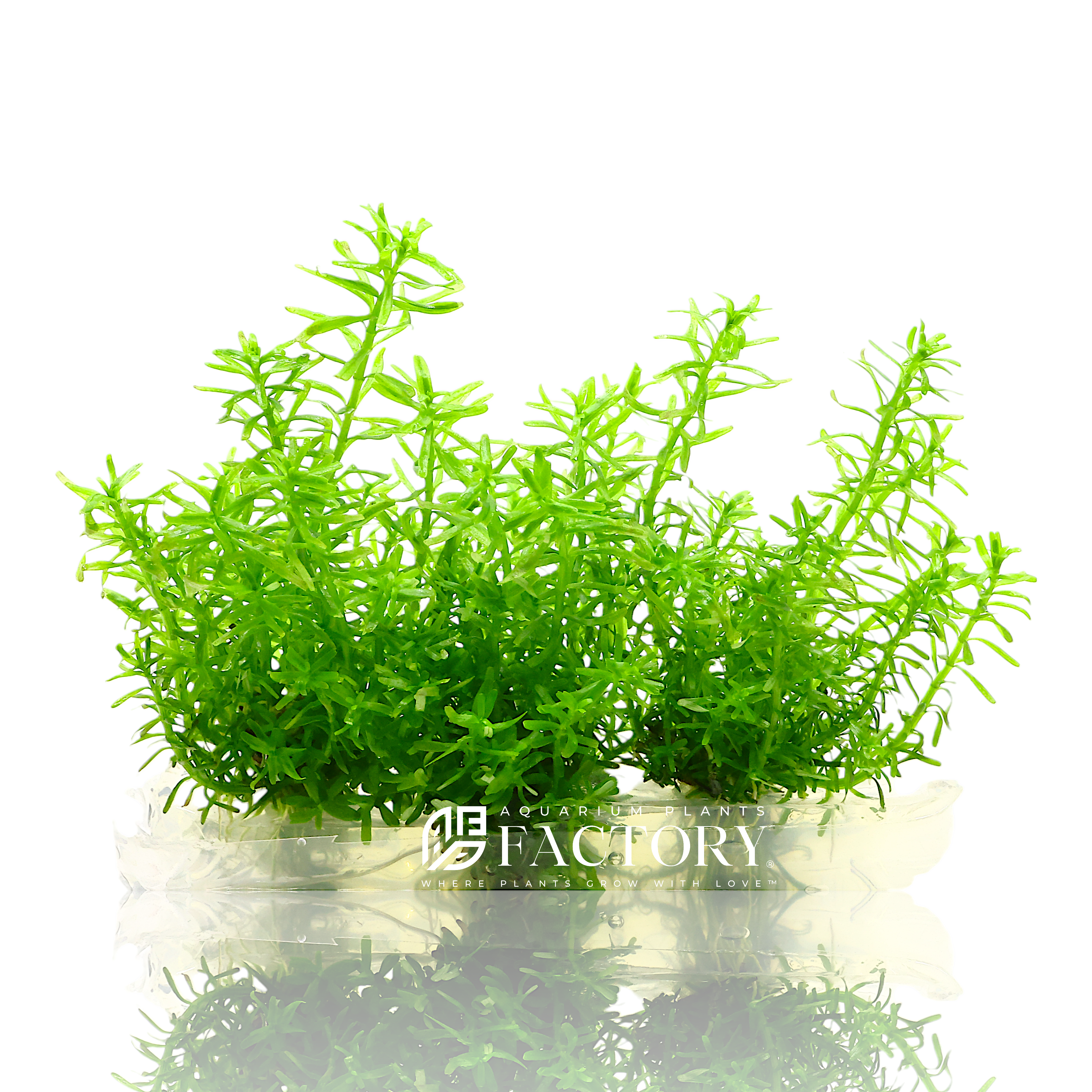
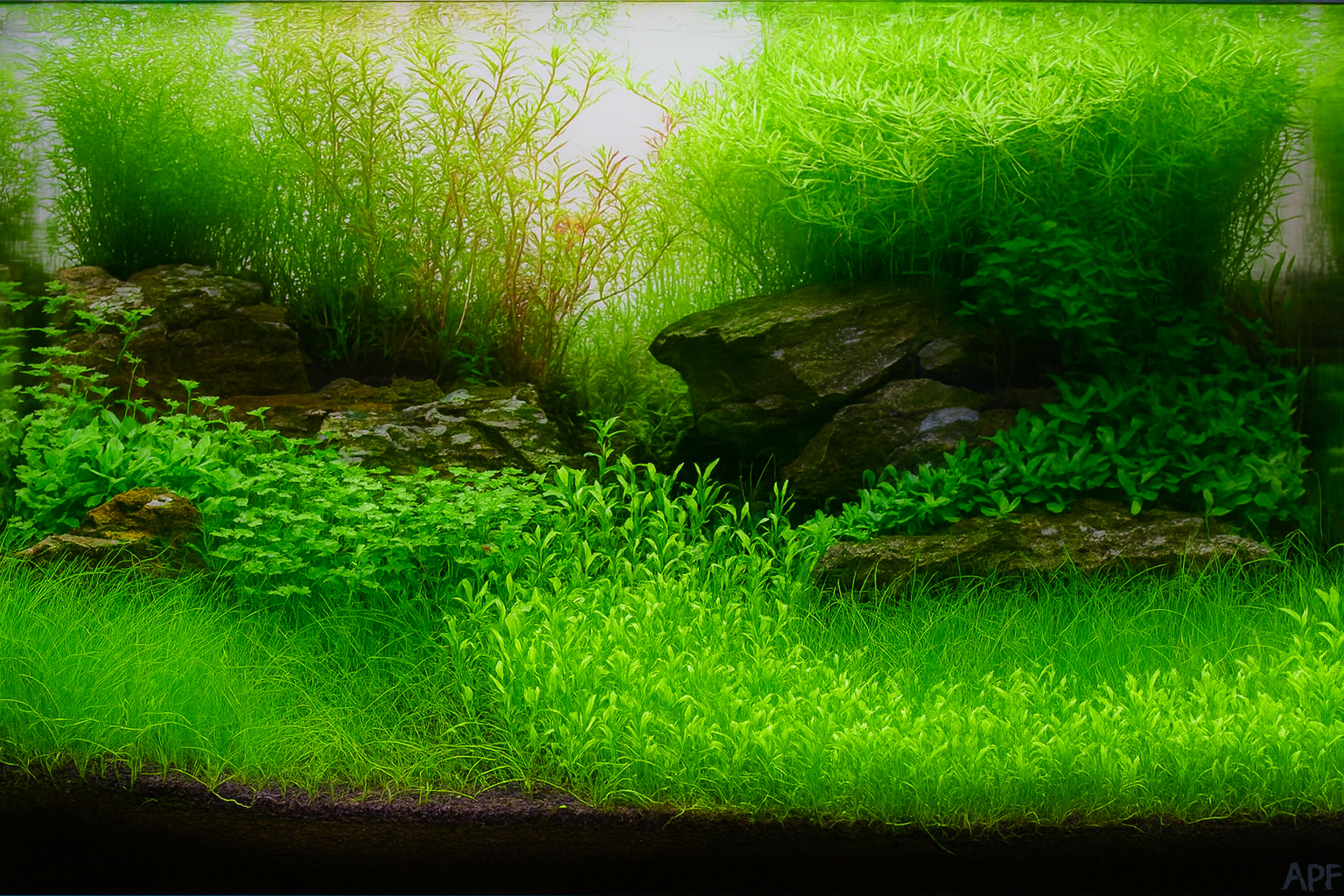
Didiplis Diandra, commonly known as Peplis Diandra or Water Hedge, is a delicate and charming stem plant that brings a touch of finesse to any freshwater aquarium. Its fine-textured leaves and vibrant green color make it a favorite among aquarists aiming to create a dense, bushy backdrop or midground cluster.
Key Features:
- Fine Leaf Texture: Offers a soft, feathery appearance with its small, needle-like leaves that grow densely along its stems.
- Vibrant Green Hue: The bright green coloration of the leaves adds a fresh, lively contrast to darker greens and reds in the aquarium.
Optimal Conditions:
- Lighting: Prefers moderate to high lighting to maintain its dense growth and vibrant color.
- Water Parameters: Thrives in slightly acidic to neutral pH (6.0-7.5) with temperatures ranging from 22°C to 28°C (72°F to 82°F).
Aquarium and Pond Benefits:
- Aesthetic Appeal: Adds depth and texture to any planted aquarium setup, perfect for creating lush, underwater landscapes.
- Water Quality: Like many aquatic plants, Didiplis Diandra helps absorb excess nutrients and contaminants, enhancing overall water quality and clarity.
Care and Maintenance:
- Growth Rate: Fast-growing, which allows for quick filling of spaces but requires regular pruning to maintain shape and promote denser growth.
- Propagation: Easily propagated by cutting and replanting the stem cuttings, making it an excellent choice for aquarists who enjoy grooming and cultivating their plant arrangements.
Conclusion:
Didiplis Diandra is an excellent choice for both novice and experienced aquarists. Its quick growth rate and beautiful, feathery foliage make it an attractive and functional addition to any aquatic setup. Whether used to create a lush green backdrop or a vibrant midground cluster, Didiplis Diandra enhances both the beauty and the health of your aquarium.
- Sold as a Tissue Culture package with vitamin liquid/gel
- Package size: Approx. 4 inches
- Sustainable growth aquarium plants species
- Tissue Culture Technology | 100% Free from Snail, Algae, Pathogen, and Bacteria plus Extended Shelf Life on all in Vitro Plants
Disclaimer: Pictures are not the actual plants you will receive, but a sample representation. Unless specific, we don't guarantee aquatic plants will be free of pests, and pesticides, grow emerged, or submerge.
|
Scientific Name |
Didiplis Diandra |
|
Synonyms |
Peplis Diandra |
|
Common Name |
Water Hedge |
|
Placement |
Midground / Background |
|
CO2 |
Not Required |
|
Growth Rates |
Slow |
|
Difficulty Level |
Easy |
|
Nutrient Substrate |
Required |
|
Can it grow emerged? |
Yes |
|
Lighting Requirements |
Medium - High |
Never release aquarium plants into natural waterways.
At a glance
- Free shipping on orders of $150 or more (after discounts) within the contiguous United States, by USPS.
- Free thermal protection is included with every shipment, all year round.
- Processing: most orders leave us within 1 to 2 business days. Tracking is emailed when your order ships.
- USPS (2 to 5 business days) ships Monday through Saturday.
- UPS 2nd Day Air® ships Monday through Wednesday. Order by Tuesday at 6:00 AM Pacific Time for same-week delivery.
- UPS Next Day Air® ships Monday through Thursday. Order by Wednesday at 6:00 AM Pacific Time for same-week delivery.
- Alaska, Hawaii, Puerto Rico, Guam, the U.S. Virgin Islands and military addresses ship by USPS at a flat rate shown at checkout.
- Weather holds: during extreme heat or cold we may hold live orders until it's safe to ship.
- We ship within the United States only.
Please bring live plants indoors and unpack them the day they arrive. Every live order is covered by our 24-Hour Live Arrival Guarantee.
The complete rules, including lost packages and address issues, are in our Shipping Policy. If anything conflicts, that policy applies.
Every live order is backed by our 24-Hour Live Arrival Guarantee. If a plant arrives dead, we'll make it right.
How it works
- Tell us within 24 hours of the delivery time on your tracking.
- Send photos of the affected items in their original, unopened packaging, plus a photo of the shipping label, to hello@aquariumplantsfactory.com with your order number.
- We'll make it right with a replacement, store credit or refund for the affected item.
Good to know
- Some melting or yellowing as plants adjust from greenhouse to aquarium life is normal. They regrow from healthy roots and rhizomes.
- Please bring your package indoors and unpack it the day it arrives.
- Free promotional items and shipping charges are not covered.
The complete rules, including what's covered and what voids the guarantee, are in our Returns, Refunds & Live Arrival Guarantee. If anything conflicts, that policy applies.
Please review your state's regulations on restricted plants, as we are committed to not shipping plants that are restricted in your area. Do not release any plants into the wild or waterways, as this can harm local ecosystems by introducing invasive species.
Your cooperation in protecting the environment is appreciated. For continuously updated information, refer to the USDA State Noxious Weed list here.
Thank you for your responsible commitment to environmental preservation.
Customers praised this tissue culture aquatic plant for being "easy to use" and "larger than it looks." Shoppers appreciated the distinct, easy-to-separate plants with no waste. Reviews noted plants stayed alive, looked good, and tied aquarium aesthetics together nicely. The packaging in baggies was easier to work with than traditional cups.
- Very easy to work with and plant out and no waste. Pretty nice.
- Beautiful starting portions, larger than it looks
- Really tied the look of my tank together
K
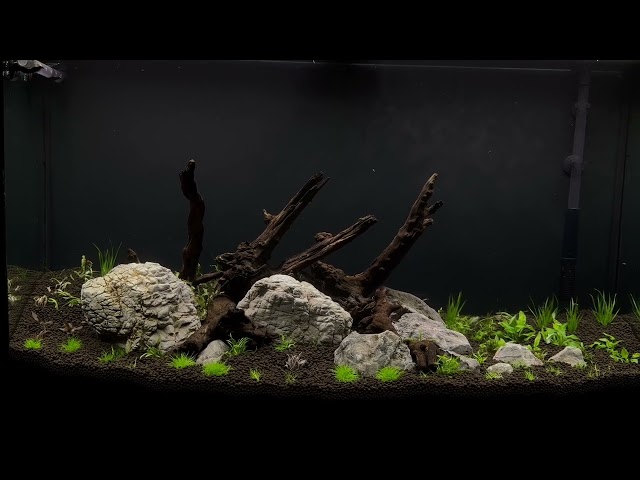
Wasn't sure how I felt about TC plants in little plastic baggies compared to the little cups I am used to getting from other growers. Turns out the one I got were much easier to plant. TC plants are often sort of undifferentiated clumps of plant material that you have to pull apart and make the best of but all 3 TC plants I bought from Aquarium Plants Factory (Didiplis diandra, Prosperinaca palustris, and Myriophllum Guyana) the TC plants were several distinct and easy to separate little multi branched plants. Very easy to work with and plant out and no waste. Pretty nice.
v
still alive and looks good so far.
A
I really like the new aquatic plant shipment I got for my 40 gallon breeder aquascape aquarium
M
This is my first time ordering with APF, and I'm super happy, I received a wonderful batch of this amazing Buce, plants super healthy with a nice clump of them, totally recommended
S
Beautiful starting portions, larger than it looks
A
Really tied the look of my tank together
K
Is this safe for turtles I want to put some in my turtles tank but if it’s toxic I don’t want him to eat it
Hello,
Thank you for your question regarding Didiplis Diandra Tissue Culture.
Didiplis Diandra is generally considered safe for most aquatic animals, including turtles. It is not known to be toxic, so if your turtle happens to nibble on it, there shouldn't be any harmful effects. However, turtles have a tendency to eat and uproot plants, so keep an eye on the plant's condition and your turtle's behavior.
If you notice that your turtle is eating large amounts of the plant, you might want to consider providing additional food options to satisfy its dietary needs and reduce the chance of it damaging the plants.
If you have any further questions or need more assistance, please feel free to reach out.
Best regards,
Aquarium Plants Factory

Recommended for You




Frequently Asked Questions
- Choosing a selection results in a full page refresh.
!


