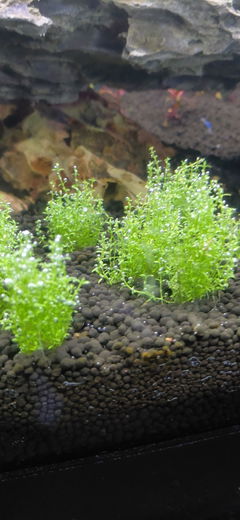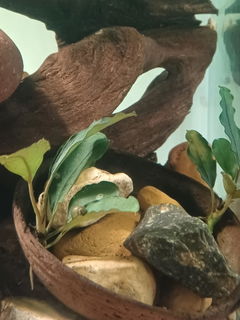


Taxiphyllum sp. Peacock, also known as Peacock Moss, is a species of aquatic moss that is commonly used in aquariums and terrariums. It is native to Southeast Asia and can be found growing on rocks, driftwood, and other submerged surfaces in slow-moving or still water.
Peacock moss is a hardy plant that is relatively easy to care for, making it a popular choice for aquarists and terrarium enthusiasts. It prefers moderate to low lighting and clean water with a neutral to slightly acidic pH. It can be propagated through division, by separating clumps of the plant and attaching them to a new surface.
In aquariums, Peacock Moss can provide a natural look and feel to the environment, and also serves as a hiding place and breeding ground for fish and other aquatic creatures. In terrariums, it can be used to create a lush and natural-looking ground cover, as well as provide a humid microclimate for plants and animals that require it.
- Sold as a small, loose portion
- Approx. 2 inches in size
|
Scientific Name |
Taxiphyllum sp. Peacock |
|
Common Name |
Peacock Moss |
|
Placement |
Attached to driftwood, stone, or decoration |
|
CO2 |
Not required |
|
Growth Rates |
Slow |
|
Difficulty Level |
Easy |
|
Nutrient Substrate |
Not required |
|
Can be grow emerged? |
Yes |
|
Lighting Requirements |
Low - Medium |
Never release aquarium plants into natural waterways.
At a glance
- Free shipping on orders of $150 or more (after discounts) within the contiguous United States, by USPS.
- Free thermal protection is included with every shipment, all year round.
- Processing: most orders leave us within 1 to 2 business days. Tracking is emailed when your order ships.
- USPS (2 to 5 business days) ships Monday through Saturday.
- UPS 2nd Day Air® ships Monday through Wednesday. Order by Tuesday at 6:00 AM Pacific Time for same-week delivery.
- UPS Next Day Air® ships Monday through Thursday. Order by Wednesday at 6:00 AM Pacific Time for same-week delivery.
- Alaska, Hawaii, Puerto Rico, Guam, the U.S. Virgin Islands and military addresses ship by USPS at a flat rate shown at checkout.
- Weather holds: during extreme heat or cold we may hold live orders until it's safe to ship.
- We ship within the United States only.
Please bring live plants indoors and unpack them the day they arrive. Every live order is covered by our 24-Hour Live Arrival Guarantee.
The complete rules, including lost packages and address issues, are in our Shipping Policy. If anything conflicts, that policy applies.
Every live order is backed by our 24-Hour Live Arrival Guarantee. If a plant arrives dead, we'll make it right.
How it works
- Tell us within 24 hours of the delivery time on your tracking.
- Send photos of the affected items in their original, unopened packaging, plus a photo of the shipping label, to hello@aquariumplantsfactory.com with your order number.
- We'll make it right with a replacement, store credit or refund for the affected item.
Good to know
- Some melting or yellowing as plants adjust from greenhouse to aquarium life is normal. They regrow from healthy roots and rhizomes.
- Please bring your package indoors and unpack it the day it arrives.
- Free promotional items and shipping charges are not covered.
The complete rules, including what's covered and what voids the guarantee, are in our Returns, Refunds & Live Arrival Guarantee. If anything conflicts, that policy applies.
Please review your state's regulations on restricted plants, as we are committed to not shipping plants that are restricted in your area. Do not release any plants into the wild or waterways, as this can harm local ecosystems by introducing invasive species.
Your cooperation in protecting the environment is appreciated. For continuously updated information, refer to the USDA State Noxious Weed list here.
Thank you for your responsible commitment to environmental preservation.
Recommended for You





Frequently Asked Questions
- Choosing a selection results in a full page refresh.
!