


![Tropical water lilies are a beautiful addition to any pond or water garden, and they come in a wide variety of colors and sizes. When purchasing Tropical Water Lilies Packages [Grower's Choice], you will receive a selection of water lilies chosen by the grower based on availability and the best performers for your growing zone.](http://aquariumplantsfactory.com/cdn/shop/files/tropical-water-lilies-packages.png?v=1682737214&width=1600)


![Tropical water lilies are a beautiful addition to any pond or water garden, and they come in a wide variety of colors and sizes. When purchasing Tropical Water Lilies Packages [Grower's Choice], you will receive a selection of water lilies chosen by the grower based on availability and the best performers for your growing zone.](http://aquariumplantsfactory.com/cdn/shop/files/tropical-water-lilies-packages_60x.png?v=1682737214)
Tropical water lilies are the ones with the big, held-above-the-water blooms — flowers up to a foot across on stems that stand clear of the pad. They need warmth and sun, and outside a warm climate they need lifting before winter. This package is six of them, picked by our growers for your zone.
What You'll Receive
- This combo package contains 6 different tropical water lilies plants
- We don't label the species. Randomly pick, can't request a specific species
About This Package
- Genus — Nymphaea species and hybrids
- Color — Varies; the mix typically spans pink, red, white and yellow
- Size range — Varies from small to large growers
- Selected for — Availability and best performance in your growing zone
- Use — Ponds, container water gardens, or tanks 20 gallons and up, in warm conditions
Care
- Sunlight — Full sun or partial shade; at least 6 hours of direct sun per day
- Water — Warm; tropicals will not perform in cold water
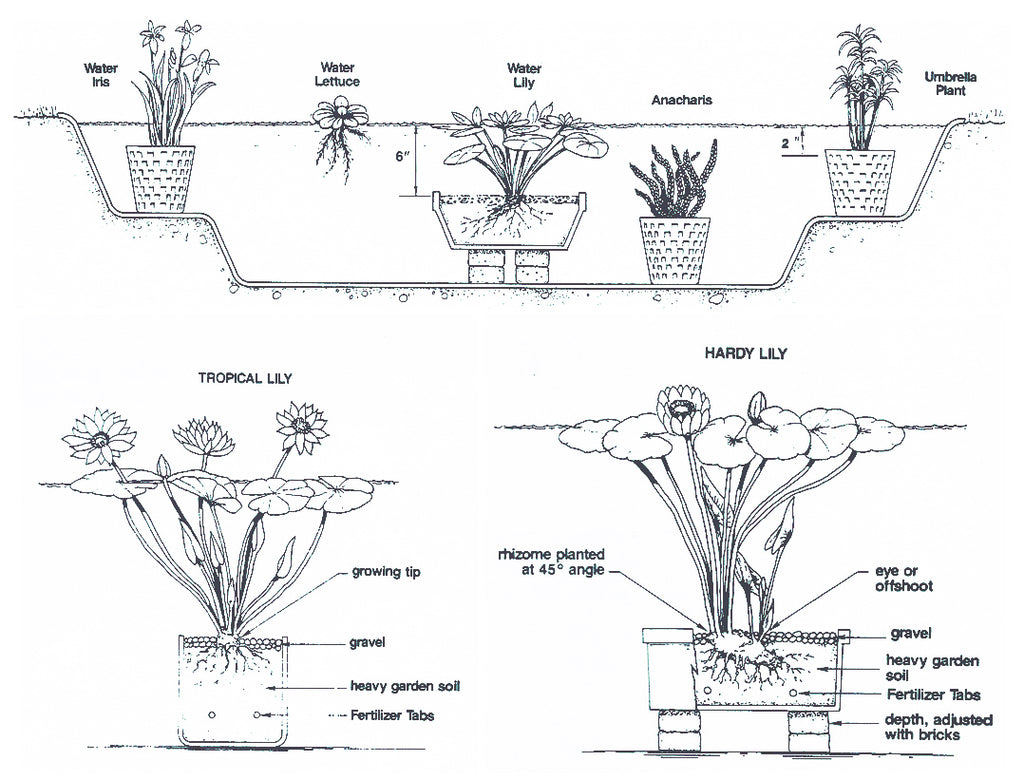
- Soil — Clay soil, topped with gravel to keep it in place
- Winter — Tubers must be lifted and stored in moist conditions unless you are in a warm climate
- Feeding — Aquatic fertilizer tabs pushed into the soil during the growing season
Grower's Notes
- These will not overwinter outdoors in a cold region. That is the single difference that matters between tropical and hardy lilies. If you cannot lift and store the tubers each autumn, buy hardy lilies instead — they come back on their own.
- Warm water is as important as sun. A shaded or spring-fed pond that stays cool will produce leaves and few flowers no matter how much fertilizer goes in.
- The blooms stand above the surface. Unlike hardy lilies, which float their flowers, tropicals hold theirs on stems clear of the water — which is why they photograph so well and why they are worth the extra winter work.
- Plant the tuber upright, crown exposed. Set it in the center of the pot with the growing point above the soil line, then cap with gravel. A buried crown rots.
- Use heavy clay soil, not potting mix. Compost floats out and clouds the pond; clay holds nutrients where the roots can reach them.
- A tank of 20 gallons and up if you grow them inside. Ponds and container water gardens are where most of these end up, but a warm indoor tank at that size suits tropicals well. Blooms are the catch: they need light at sunlight strength for a long stretch each day, and below that the plants put everything into pads. Those pads arrive quickly, so trim them often or the surface closes over.
Planting Instructions for Water Lily
There are two main types of water lilies, tropical and hardy. The differences between tropical and hardy water lilies are a growing habit. Tropical water lilies don't do well in winter. Hardy water lilies, on the other hand, can tolerate the cold. Tropical water lilies tubers must be removed from the pond and stored in moist conditions to come back in the future years. In warm climates, they can remain in the pond.
Notes
- Pictures are not the actual plants you will receive, but a sample representation. Unless specific, we don't guarantee aquatic plants will be free of pests, pesticides, grow emerged, or submerge.
- Never release aquarium plants into natural waterways.
At a glance
- Free shipping on orders of $150 or more (after discounts) within the contiguous United States, by USPS.
- Free thermal protection is included with every shipment, all year round.
- Processing: most orders leave us within 1 to 2 business days. Tracking is emailed when your order ships.
- USPS (2 to 5 business days) ships Monday through Saturday.
- UPS 2nd Day Air® ships Monday through Wednesday. Order by Tuesday at 6:00 AM Pacific Time for same-week delivery.
- UPS Next Day Air® ships Monday through Thursday. Order by Wednesday at 6:00 AM Pacific Time for same-week delivery.
- Alaska, Hawaii, Puerto Rico, Guam, the U.S. Virgin Islands and military addresses ship by USPS at a flat rate shown at checkout.
- Weather holds: during extreme heat or cold we may hold live orders until it's safe to ship.
- We ship within the United States only.
Please bring live plants indoors and unpack them the day they arrive. Every live order is covered by our 24-Hour Live Arrival Guarantee.
The complete rules, including lost packages and address issues, are in our Shipping Policy. If anything conflicts, that policy applies.
Every live order is backed by our 24-Hour Live Arrival Guarantee. If a plant arrives dead, we'll make it right.
How it works
- Tell us within 24 hours of the delivery time on your tracking.
- Send photos of the affected items in their original, unopened packaging, plus a photo of the shipping label, to hello@aquariumplantsfactory.com with your order number.
- We'll make it right with a replacement, store credit or refund for the affected item.
Good to know
- Some melting or yellowing as plants adjust from greenhouse to aquarium life is normal. They regrow from healthy roots and rhizomes.
- Please bring your package indoors and unpack it the day it arrives.
- Free promotional items and shipping charges are not covered.
The complete rules, including what's covered and what voids the guarantee, are in our Returns, Refunds & Live Arrival Guarantee. If anything conflicts, that policy applies.
Please review your state's regulations on restricted plants, as we are committed to not shipping plants that are restricted in your area. Do not release any plants into the wild or waterways, as this can harm local ecosystems by introducing invasive species.
Your cooperation in protecting the environment is appreciated. For continuously updated information, refer to the USDA State Noxious Weed list here.
Thank you for your responsible commitment to environmental preservation.
![Tropical water lilies are a beautiful addition to any pond or water garden, and they come in a wide variety of colors and sizes. When purchasing Tropical Water Lilies Packages [Grower's Choice], you will receive a selection of water lilies chosen by the grower based on availability and the best performers for your growing zone.](http://aquariumplantsfactory.com/cdn/shop/files/tropical-water-lilies-packages.png?v=1682737214)


Recommended for You




Frequently Asked Questions
- Choosing a selection results in a full page refresh.
!


